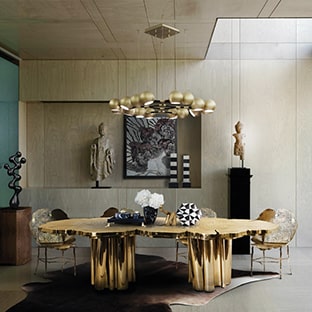
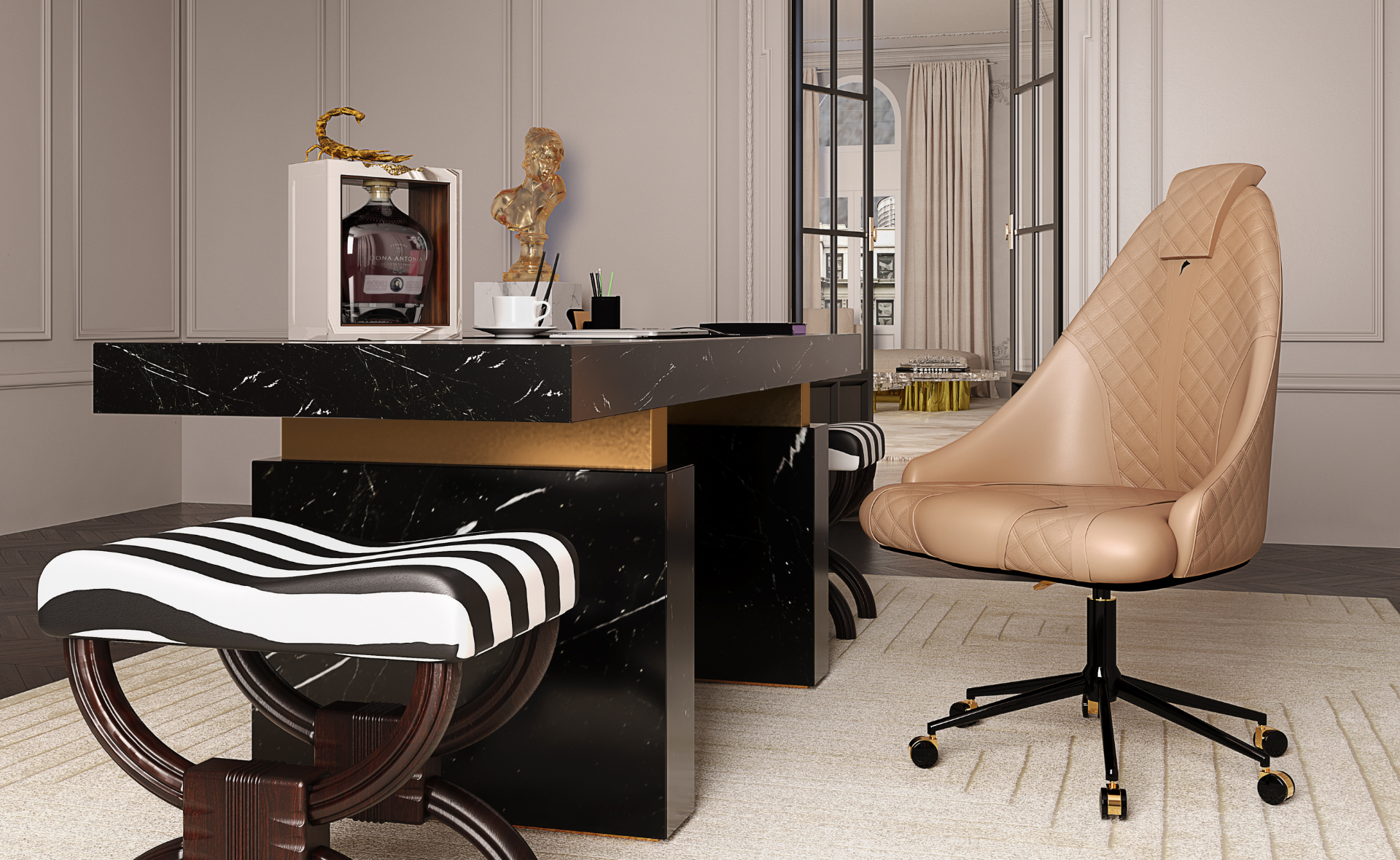
The entrance hall is the calling card of any space, responsible for setting the mood and making a lasting impression. It’s the stage for grand entrances and a showcase of…




Marie Thérèse
HRH Princess Marie Therese Charlotte of France was the first child born to King Louis XVI and Queen Marie Antoinette. She was born on December 19, 1778 at Versailles. Her birth was a much heralded event and had been a long time coming and, although not the son and heir everyone was hoping for, she was adored, especially by Queen Marie Antoinette who doted on her as her special little girl she could keep to herself and not have to share with the country as she would a son.

She was named Marie Thérèse after her devout and formidable grandmother Empress Maria Theresa of Austria (Holy Roman Empire of Germany). She grew up under the guidance of the Duchess of Polignac, her governess, but Marie Antoinette was a very “hands on” mother and despite the favor she showed the little “Madame Royale” she did not spoil the princess as her father King Louis XVI tended to. Despite the popular misconception of the Queen she was not extravagant, uncaring or aloof and she took great care to raise her daughter to be a grounded, compassionate woman who was not snobby or held herself above others.

The goodness of Princess Marie Therese is hard to overestimate. In the face of the most horrific tragedy and unspeakable suffering (and she was never told what happened to her family other than her father who she knew was executed) she asked God’s forgiveness on those who had murdered her father and persecuted her family. The emotional trauma she endured was unimaginable and fears for her own life did not end until the Reign of Terror finally came to a halt and the Madame Royale was released and sent to her relatives in Austria just before she turned 17 as part of a prisoner exchange. This marked the beginning of the period of her life usually dismissed as the period in which she was a mere political pawn for the House of Hapsburg. However, the sensitive young girl was grateful enough to be away from the setting of the nightmare she had endured. She later moved to Latvia where her uncle, the Comte de Provence now titled King Louis XVIII, was being harbored by Tsar Paul I of Russia. He arranged her marriage, in Latvia in 1799, to his nephew Louis-Antoine the duc d’Angoulême. The two were rather shoved together and Marie Therese was happy enough to have some stability and a family of her own in her life again.
 The couple later moved to Britain and after the first downfall of the Emperor Napoleon in 1814 the Madame Royale was able to return to France again for the first time since she had left under such tragic circumstances in 1795. The homecoming was very traumatic for her. Memories of France were terrifying, sad reminders appeared everywhere she looked and all around her were the faces of those who had betrayed her family. Given all she had gone through she was understandably a little paranoid. However, she was also no coward and when Napoleon made his return and her uncle Louis XVIII fled his throne the Madame Royale was prepared to stand and fight and inspired French royalists to organize in support of the traditional monarchy. She left only when the threat of imperial troops sent to arrest her made her fear their retaliation on the surrounding population. Napoleon was impressed by her bravery and, in a way, she did make a difference as French royalists did rise up against Napoleon and he had to dispatch troops to suppress them. Had he not been lacking those soldiers the battle of Waterloo might have ended differently.
Yet, Napoleon was defeated, the Bourbon dynasty was restored yet again and when Louis XVIII died and Charles X became King of France the Madame Royale found herself then the Madame la Dauphine as her husband became heir to the throne. When revolution threatened to bring down the staunchly royalist King Charles X he prepared to abdicate in favor of his son. However, Marie Therese and her husband had never had children and the Dauphin was prepared to abdicate in favor of his nephew. So it was that Marie Therese was in the unique position of being the Queen consort of France for a grand total of roughly 20 minutes in 1830 from the time her father-in-law abdicated to the time her husband abdicated as nominal King Louis XIX. It ended up being a matter of pure principle in any event as it was Louis Philippe III, Duc d’Orleans who actually took the throne. Despite being considered a usurper by the former (immediate) royal family King Louis Philippe saw his displaced relatives to the coast to sail into exile once again in Britain.
 Queen Marie Therese lived in exile, moving around Europe from Scotland to Austria to Italy, outliving her husband until her death in 1851 of pneumonia. She was the same caring, compassionate and saintly person she had always been right to the very end. In all the years since her death she remains a fascinating figure. Perhaps, to a large degree, because though all she had endured may have scarred her, none of it was able to break her. Undoubtedly she endured a lot, aside from the earliest years of her childhood, her entire life had been one long tragedy marked by suffering, persecution, political upheavals and several trips into exile. Yet, through it all, the core values her devout parents instilled in Marie Therese never left her through all her trials in all her life.
Marie Therese grew up knowing very different parents than what people think is the “truth” about the King and Queen today. She adored and revered her father and noted how often her mother concerned herself for the poor and took care that Marie Therese did as well. She also knew tragedy very early in life when her brother and sister died, leaving her and her remaining brother as the only children of the royal couple. The King and Queen did their best to protect their children from the growing French Revolution but eventually they were touched by the horror that engulfed France like everyone else. The mob violence effected Marie Therese for the rest of her life and the little Royal Family was arrested and thrown in prison. King Louis XVI was executed, which was especially heartbreaking for Marie Therese who placed her father on such a pedestal and so adored him. When Queen Marie Antoinette was also taken away (ultimately to her execution as well) the Madame Royale was placed in the care of her aunt, the pious Princess Elisabeth of France. A year later in 1794 the saintly Elisabeth was also executed and by the next year her brother the Dauphin (by then legitimately King Louis XVII) died of starvation and the effects of long periods of torture and neglect at the hands of the revolutionaries. This left poor little Marie Therese as the only surviving member of the immediate French Royal Family.

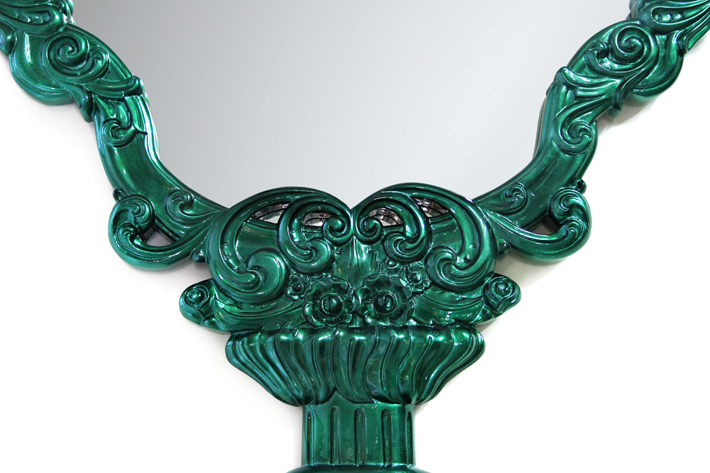
Marie Thérèse represents Marie Antoinette’s dynasty that we have created to reinterpret our large-scale wall mirrors. Marie Thérèse is a non-traditional mirror, a sculptural piece, with sensual curves. It is an unparalleled woodwork, an undeniable mastery of form. True beauty is reflected in this mirror with a hand-carved-wood-frame, colored in bronze. You will be enticed to touch the sculptured frame to appreciate its beauty.

Marie Thérèse embodies the quality and integrity of an original piece of art.